
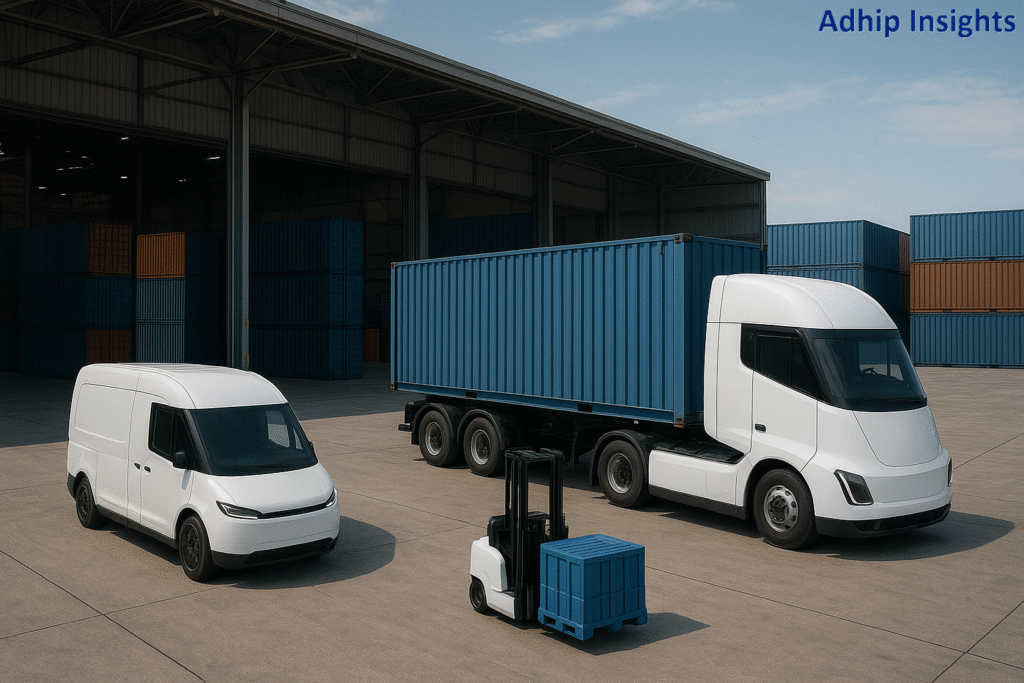
The logistics sector is rapidly changing. Automation no longer stays on production lines with the emergence of Industry 4.0, it is transforming the way goods are transported, sorted, and stored. Autonomous vehicles are used within industrial yards and warehouses, and this is one of the most thrilling innovations. These intelligent machines are making work quicker, safer and more economical and Indian corporations are just starting to notice.
What are Autonomous Vehicles in Warehousing and Yard Operations?
AVs are self-driving robots that have sensors, cameras, GPS, and AI based software enabling them to move autonomously without human supervision. These vehicles are meant to work in industrial environments to fulfill certain functions including:
- Terminal tractors or yard trucks used to move containers or trailers in industrial yards.
- Robots used to move materials within warehouses.
- Self-driving forklifts and pallet movers to stack and arrange the goods.
- Drones and robotic carriers for last-mile warehouse operations.
These systems are capable of operating 24/7 with minimum downtime as opposed to traditional manual equipments thus significantly enhancing throughput.
Why Companies Need Autonomous Vehicles in Logistics?
The logistics sector in India has a contribution of approximate 14 percent to GDP, and it is projected that the sector will reach USD 380 billion by 2025. Nevertheless, high operating costs, lack of skilled workers and ineffective operations in the yard remain issues that hold down productivity.
Here is where the self-driving vehicles in the industrial yards and warehouses will be a game-changer. In the case of a nation such as India, where the need to receive orders faster is blistering given the proliferation of e-commerce platforms such as Flipkart, Reliance JioMart, and the Amazon India, automation has the potential to unlock enormous opportunities.
Key drivers for adoption in India include :
- Shortages of labor – Warehouses usually experience shortages of the workforce, particularly during peak seasons. AVs can fill the gap.
- Increased safety issues – The number of industrial accidents is prevalent in manual forklift operations. AVs reduce risks.
- Cost Pressures – Autonomous systems use less fuel, less idle time and less maintenance costs.
- Scalability – Businesses can increase capacity without necessarily increasing manpower in a proportionate manner.
Benefits of Autonomous Vehicles in Yards and Warehouses.
Increased efficiency – Autonomous forklifts and AGVs do not stop to allow people to operate the equipment and as such, there will be continuous flow within the warehouses.
Better Safety – AVs minimize accidents, occupational injuries, and product damage with sensors and artificial intelligence navigation.
Reduced Costs – Organisations reduce costs in labour, fuel and downtimes.
24/7 Operations – Machines do not require rest; they are able to work 24 hours and extend output.
Data-Driving-Insights – AVs are connected to the warehouse management systems (WMS) and offer real-time insights into material flow and stock levels.
Examples of Autonomous Vehicle Adoption in India.
This technology is already being invested in by a number of Indian companies.
- Tata Motors and Tata Elxsi are working on smart mobility services such as autonomous logistics vehicles in industrial areas and ports.
- GreyOrange is another robotics company headquartered in Gurgaon and has earned international attention due to its warehouse robots and autonomous systems based on AI and deployed by Flipkart and other retailers with large warehouses.
- Addverb Technologies is an Noida based company producing autonomous mobile robots (AMRs) and robotic shuttles that enable companies such as Reliance and Coca-Cola to automate their warehouses.
- Mahindra Logistics has shown interest in automation of its extensive network of warehouses and is looking at robotics and AVs to increase efficiency.
These illustrations demonstrate that the Indian firms are not only consumers, but they are also innovators of the autonomous vehicle ecosystem.
Industrial Yards Use Cases.
Autonomous vehicles are practical especially in the management of the yard where trailers, trucks, and containers should be transported hurriedly and effectively. For example:
- At big factories, autonomous yard trucks may move raw materials and processed goods without using a steering wheel.
- AVs can process container stacking and container movement in ports and container yards, minimizing congestion and turnaround rates.
- AVs guarantee a quicker docking and unloading of trailers at e-commerce distribution hubs, enabling the company to achieve the goal of achieving same-day or next-day delivery.
Challenges in Adoption
Despite the obvious advantages, India is still struggling with mass integration of autonomous vehicles:
- Sweet Start Investment – AV systems are expensive to install.
- Infrastructure Readiness – Most of the warehouses and yards do not have standard layouts to be navigated easily.
- Skill Gap – AVs require workers to be trained to operate and maintain them.
- Regulatory Uncertainty – There is still uncertainty on clear policies regarding autonomous vehicle operations in India.
These challenges notwithstanding, the payoff in the long-run justifies adoption of AV as a good business case.
The Road Ahead
Indian government is driving initiatives such as the Make in India and the National Logistics Policy (2022) that aims at lowering the cost of logistics and increase efficiency. This offers the ideal climate in which autonomous vehicles in warehouses and industrial yards would flourish.
During the next few years, we will see :
- Wider adoption of autonomous forklifts and AGVs in e-commerce and FMCG warehouses.
- Sophisticated yard management AI and IoT.
- Greater collaboration between Indian robotics startups and global AV technology providers.
- A transition to green logistics, in which autonomous vehicles and electric cars will lower carbon footprints.
Final Thoughts
Self-driving cars have ceased to be a far-fetched idea, but it is now a strategic requirement of the Indian businesses that aim to remain relevant in terms of logistics and supply chain management. These inventions are already bearing fruits through warehouses in Delhi NCR to container yards in Mumbai.
With the cheaper technology and more favorable policies, autonomous systems will be quickly adopted in industrial yards and warehouses across India. The early adoption of this trend not only will help companies to save money but also establish new standards of efficiency and safety.