
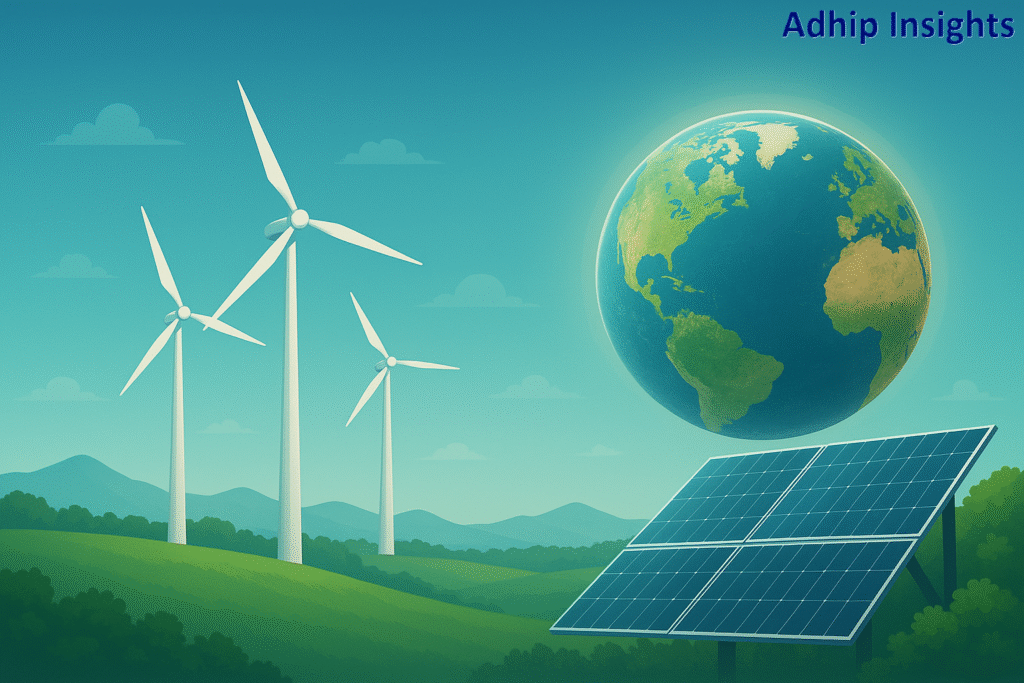
The climate change is no longer the thing which can happen – it is the present. The world is warning in the form of unprecedented wildfires, extreme storms and increasing sea levels to call attention of the human kind. People are also in need of new instruments and more efficient measures to solve this crisis. Then comes Artificial Intelligence (AI) – a technology that is most commonly connected with self-driving vehicles and voice assistants but ever more it is becoming a climatic change disruptor.
How to Solve the Climate Puzzle using AI
The climate system is incredibly complicated. Changes in temperature, greenhouse gases, ocean flows, clear cutting of trees and human activities combine in unpredictable ways. Although effective, traditional climate models fail to handle the huge amount of necessary data in order to gain a complete understanding of these interactions. And here AI can show all its strength.
One branch of AI, machine learning, can process large satellite or weather stations or environmental sensor datasets. It finds patterns and makes predictions and offers actionable insights that would have been very difficult to find by humans alone. An example is that the AI algorithms have stunned people by accurately forecasting extreme weather patterns that enable people to have more time to prepare and before disaster-related losses occur. It is as though you had a weather prophet who gains in accuracy with increasing seasons.
Energy Efficiency Revolution
Greenhouse gas emission is among the biggest producers of greenhouse gases especially in energy production. AI is assisting industries and cities to consume energy more intelligently, reducing waste and reducing emissions. With the help of AI-generated smart grids, the energy demand and offer can be evenered in real-time, which means that the renewable energy sources like wind and solar power are used economically.
AI also streamlines the industries. Using AI-driven predictive maintenance, it is possible to identify inefficiencies that may lead to energy wastage across the equipment and smart building systems where heating, cooling, and lighting can be controlled to maximize energy savings without compromising on comfort. In transportation, AI uses artificial intelligence to control traffic that would decrease in the number of emissions. Saved watts and emission reduction will bring us a step forward towards the greener future.
Increasing adoption of Renewable Energy
A low-carbon future depends on renewable energy, however, solar and wind energy generation can be irregular. AI gets rid of this issue by predicting energy production and best storage conditions. Machine learning models can determine the amount of sunlight a solar panel will get or the wind speed of the turbine and customize energy distribution to maximize efficiency.
The AI also helps hasten the decline of fossil fuel usage as it increases the stability and predictability of renewable energy which makes it more reliable. Consider a world in which energy systems automatically smooth the supply of solar, wind, and conventional power so that there is minimal imbalance and constant high-quality power. It is the might of AI-enabled renewable energy management.
Conservation of Ecosystems and Biodiversity
Climate change is not only about the increase in temperature but rather about the disturbed ecosystems. There is further application of AI in monitoring forests, the ocean, and animals. AI-based satellites can help identify illegal logging in real-time, monitor the changes of coral reefs and track endangered species.
As an example, drones can perform surveillance in large forests and find places of deforestation, notifying the authorities in real-time. In the oceans, AIs can be used to examine water quality and fish stocks and keep the ecosystems healthy. With the ability to offer real-time, accurate data, AI can also allow more effective conservation measures, safeguarding biodiversity whilst also fighting climate change.
Directing Climate policy and Choice
AI does not only assist scientists, but also policymakers. With complex AI-powered simulation, the possible effects of climate policies, including carbon tax, renewable energy incentive stimulus, or urban planning policies, can be modeled. This will enable governments to make sound decisions that will strike some balance between environmental good and the social and economic realities.
Also, AI is capable of increasing the visibility of climate efforts. An example is that a blockchain and AI would be able to monitor carbon credits and reduction of emissions making all countries accountable and developing trust among them. This degree of accuracy and good faith would change the game of international climate accord.
Difficulties and way ahead
Nevertheless, AI is not a magical bullet. It needs immense amount of data and computational resource, which are also potentially costly to the environment. Algorithms may also have prejudice that results in ineffective forecasts. Developing AI in a responsible way to put emphasis on fairness, transparency, and energy conservation is important to make sure the technologies serve the planet efficiently.
Final thoughts
Artificial Intelligence is not only a trend in technology, but a revolutionary means of dealing with climate change. On the level of forecasting severe weather and streamlining energy consumption to the development of renewable energy sources and the protection of ecosystems, AI provides us with the data and means to change the courses of environmental impact.
Responsible use of AI may prove to be a way of creating the distinction between reactive minimums and proactive solutions as the climate crisis sets in motion. It is these sources of human ingenuity combined with the analytical power of AI that has helped us and will continue to help us, get on the road to a sustainable and low-carbon future, where technology is not a mere servant to humanity, but its protector into the next generations.